
News
AASWSW Fellow News: CHURCH, Blackouts, and Outcomes for Juvenile Lifers
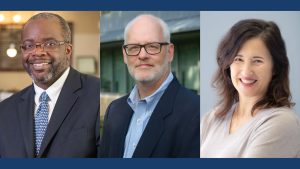
American Academy of Social Work and Social Welfare Fellow John Wallace combines Church and cognitive behavioral therapy, Fellow Daniel J. Flannery weighs in on crime during blackouts, and Fellow Laura Abrams co-authors a study about juveniles who serve life sentences.
University of Pittsburgh Program Pairs Biblical Messages with Cognitive Behavioral Therapy
August 7, 2024 – Inspired by his relationship to his Pittsburgh church, Fellow, professor, pastor, and David E. Epperson Endowed Chair at the University of Pittsburgh, John Wallace, PhD brought together Pitt scholars and local ministers to address mental health in Homewood, a primarily Black neighborhood. The project, Congregations as Healers Uniting to Restore Community Health (CHURCH), intends to teach local faith leaders about cognitive behavioral therapy so they can help parishioners who struggle with their mental well-being, while fighting stigmas that keep people from seeking treatment.
Read more about CHURCH in Pitt Magazine.
Does Crime Go Up During Blackouts?
August 8, 2024 – Do power outages lead to increased crime? After two tornadoes left residents of Northeast Ohio without power, they consider whether bad actors may take advantage of non-functioning security systems, surveillance cameras and streetlights to commit crimes. Fellow and director of the Begun Center for Violence Prevention, Research and Education, Daniel J. Flannery, PhD weighs in for Cleveland.com. “It’s just not that simple,” Flannery said.
Read more on Cleveland.com.
Study Finds Racial Disparities in Outcomes for Juvenile Lifers
August 10, 2024 – Fellow and Chair of the Department of Social Welfare at the UCLA Luskin School of Public Affairs Laura Abrams, PhD recently co-authored a study about minors who have been given life sentences in prison. Published in the Journal of Criminal Justice, the study is part of a three-year research project that will look at how various policy responses have influenced juvenile lifer outcomes to offer insight into what future policy reform should be.
Read the full story in the Daily Bruin.