
News
AASWSW Fellow News: Aging, Health, and Homelessness in Later Life
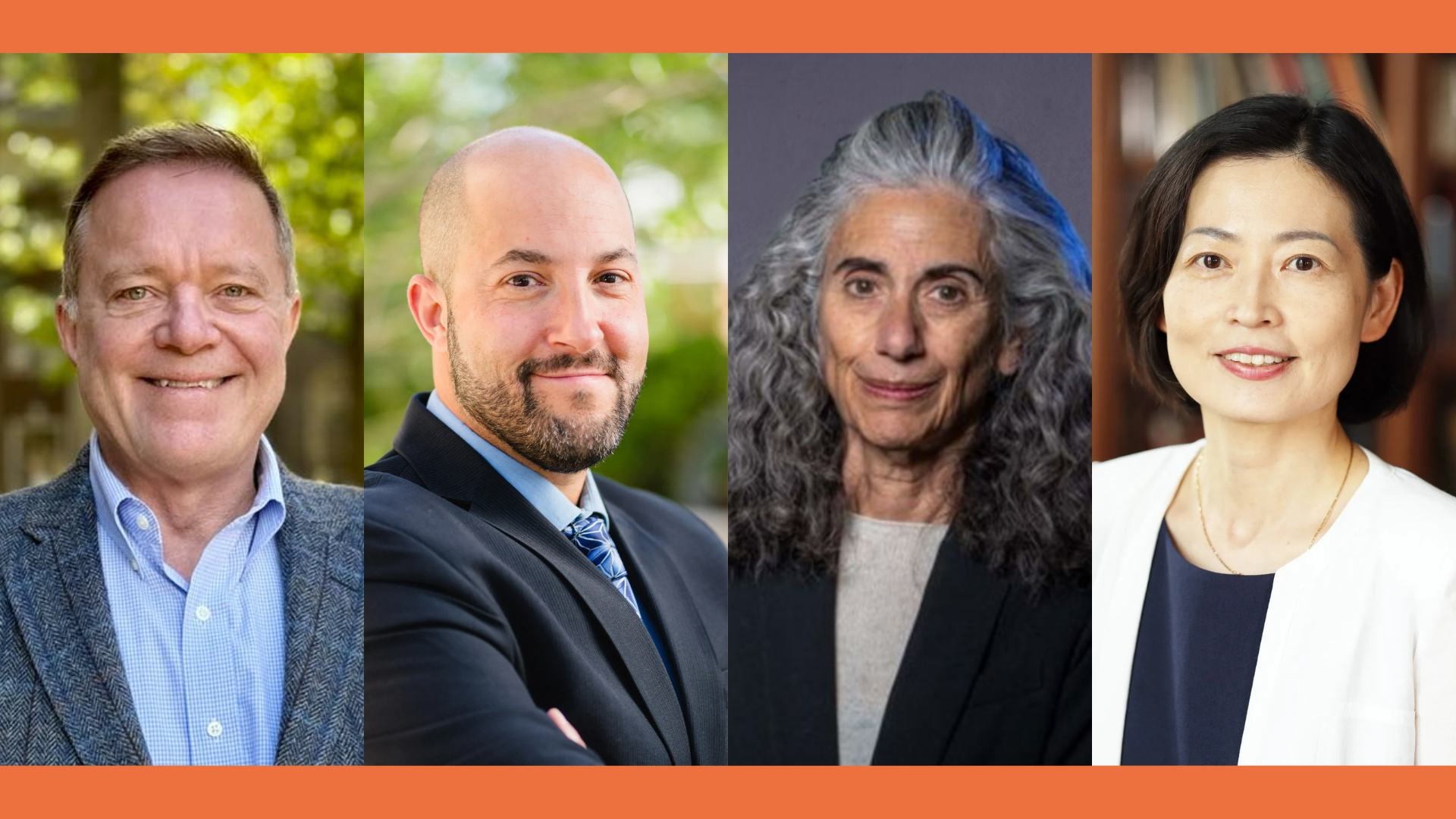
Fellows Dennis Culhane, Eric Garland, Judith Gonyea, and Yuri Jang pictured left to right.
The Social Security Gap Pushing Baby Boomers into Homelessness
August 5, 2026 — Baby boomers ages 60–65 are experiencing more days homeless than other seniors — and researchers like Fellow Dennis P. Culhane, PhD, have long known why. Culhane, the Dana and Andrew Stone Professor of Social Policy at the University of Pennsylvania's School of Social Policy & Practice, is quoted in Voice of San Diego on the Social Security eligibility gap trapping this cohort: many worked under-the-table jobs like construction, farm work, or domestic work and can't qualify for regular Social Security, but they're also too young for Supplemental Security Income. The largest birth cohort in U.S. history is now aging into a safety net that was never built to accommodate their size or their needs. "We predicted this was coming," Culhane said.
Read more from Voice of San Diego.
Mindfulness Therapy for Opioid Misuse Delivers 12-to-1 ROI
July 23, 2026 — What if a mental health treatment paid for itself twelve times over? Fellow Eric Garland, PhD, is senior author of a new Value in Health study finding that Mindfulness-Oriented Recovery Enhancement (MORE) delivers a 12-to-1 return on investment as a treatment for opioid misuse. The analysis estimates lifetime cost savings of more than $324,000 per patient — generated through reductions in overdose deaths, hospitalizations, homelessness, and lost productivity. MORE, which Garland developed, combines mindfulness, cognitive reappraisal, and savoring techniques to address opioid misuse and chronic pain. Garland is Endowed Professor at the Sanford Institute for Empathy and Compassion and Professor of Psychiatry at UC San Diego.
Read more from UC San Diego.
Challenging Stereotypes About Older Women Experiencing Homelessness
July 2026 — What do we assume about older women experiencing homelessness? Fellow Judith Gonyea, PhD, professor at the Boston University School of Social Work, is challenging one of the most persistent assumptions in her field: that this population is isolated and without family ties. At the 23rd International Association of Gerontology and Geriatrics (IAGG) World Congress in Amsterdam, Gonyea presented research showing something very different. Her in-depth interviews with 15 women in their 50s — co-authored with Kelly Melekis of the University of Vermont — found that many were active caregivers, caring for adult children with serious health conditions, supporting aging parents, or taking on paid caregiving work to survive. One participant left her job and her relationship to care for her mother for more than four years, only to face eviction after her mother died.
Read more from Boston University School of Social Work.
Sleep as a Pathway Linking Urinary Incontinence and Depression
May 7, 2026 — Older adults experiencing urinary incontinence are at higher risk of depression — but the connection isn't just about the physical condition itself. Fellow Yuri Jang, PhD, Professor at the USC Suzanne Dworak-Peck School of Social Work and the Edward R. Roybal Institute on Aging, co-authored a new PLOS ONE study finding that poor sleep quality is one important pathway linking the two, accounting for roughly a quarter of urinary incontinence's total effect on depressive symptoms. Drawing on data from 306 older Korean Americans (aged 65–102) living in low-income senior housing in the Los Angeles area, the study points to sleep quality as an important — and often overlooked — target for supporting the mental health of older adults experiencing incontinence.
Read more from PLOS ONE.